Sunday, March 28, 2010
Social Canada – Stag and doe
Sunday, February 21, 2010
Pragmatism
Interestingly, and while we’re figuring out what to do (should we start looking for a replacement right away or should we wait to see if the plans of amalgamation with another church are viable first?), we got the help of the same person who came to the rescue two years ago and acted as our interim organist. His name is Ken Seiling, and whenever he’s not playing the organ or conducting the choir, he’s quite busy as the CEO of the Region of Waterloo, a position he has held for 25 years now (only in Canada you get to see one of the most high-profile politicians in the province play organ at a church too).
As much as I appreciated the departing director, both personally and as a very gifted musician, my extreme pragmatism allowed me to move on almost instantaneously. After all, to me it was just about somebody who had quit his job, something I often see at the office. In spite of the fact that our director left abruptly and as we were getting ready for a concert, I just adapted and started to plan ahead. My line of thinking is always the same: if I could leave my family and friends behind and go to another country, then I can definitely get past the fact that somebody is not working with me anymore, even if it is somebody I appreciated.
But not everybody feels the same, and it is not easy for me to remember that. Our church choir is unbelievable, there are people in there who have been singing for more than 20, 30 or even 40 years! There's a picture of the choir from (I think) the late 60's in the church's library, and I'd say that half of those individuals are currently singing with me... The choir, and the church, are very important in these people's lives, and it's expectable that they are far more affected by this situation than I am.
In the meantime, and while everybody heals, we're trying to ensure the continuity of our Music Ministry, something our church is very well known for. Luckily for us, Mr. Seiling has agreed to serve as organist and interim Director of Music Ministry, while one of the members of our choir, who has belonged to the church since she was born and is without a doubt the best soprano I have ever sung with, Jennifer, will act as the interim Director of Intergenerational Music, which means she will take care of the kids, something they will greatly benefit from. Even more, whenever Ken Seiling is not available for whatever reason, Jen will be our conductor as well. I couldn't think of a better solution, she's extraordinarily talented. I will be working with both Jen and Ken closely in the next few months, as I'm becoming one of the chairs of the Worship committee. It's going to be fun, I'm sure!
I'm very involved with what's going on at my church, as you can see. I still find very interesting how they operate here in Canada, it's such a big difference from the little I know from my home country. My involvement is my way to give something back; this church welcomed me and then my wife and kids and treated us like family since Day 1.
Pretty much like this country did.
Lo interesante del tema, y mientras tratamos de dilucidar qué hacer (empezamos a buscar un reemplazo enseguida o esperamos a ver qué pasa con los planes de amalgamiento con otra iglesia primero?), es que contamos con la ayuda de la misma persona que nos ‘rescató’ hace dos años y actuó como nuestro organista temporario. Su nombre es Ken Seiling, y cuando no está tocando el órgano o dirigiendo el coro, está bastante ocupado con su ‘trabajito’ de CEO de la Región de Waterloo, un cargo que lleva ejerciendo –y por el que ha sido re-elegido muchas veces– por más de 25 años (sólo en Canadá uno tiene a uno de los políticos más encumbrados de la provincia tocando el órgano en una iglesia los domingos!).
Por mucho que apreciaba al director renunciante, como persona y como el excelente músico que es, mi pragmatismo extremo me llevó a adaptarme a la situación de manera casi instantánea. Después de todo, en el fondo esto era sólo una persona que había renunciado a su trabajo, algo que veo a diario en la oficina. A pesar de que nuestro director se fue abruptamente y justo cuando estábamos por dar un concierto, yo simplemente di vuelta la página y comencé a planear lo que viene. Siempre tengo la misma línea de pensamiento: si fui capaz de dejar a mi familia y mis amigos, a mis raíces detrás cuando me fui a otro país, definitivamente puedo superar el trance de ver que alguien no trabaja más conmigo, aunque sea alguien a quien aprecio.
Singing with my really good friends David and Joyce. We consider both of them –and their spouses– as family
Cantando con mis muy buenos amigos David y Joyce. Tanto ellos como sus cónyuges son como de la familia para nosotros
Mientras tanto, y mientras aguardamos que sanen las heridas, estamos tratando de asegurar la continuidad de nuestro Ministerio de Múscia, algo por lo que nuestra iglesia es muy conocida. Por suerte, el señor Seiling aceptó continuar como organista y Director Musical interino, mientras una de las integrantes del coro, miembro de nuestra iglesia desde que nació y sin dudas la mejor soprano con quien yo he cantado en mi vida, Jennifer, actuará como Directora Interina de Música Intergeneracional, lo que significa que se va a ocupar de los chicos, algo que a ellos los va a beneficiar enormemente. Más aún, cuando sea que Ken Seiling no esté disponible para un servicio, Jen se ocupará de dirigir al coro. No podría pensar en una mejor solución, porque ella es extraordinariamente talentosa. Yo voy a trabajar codo a codo con Jen y Ken en los próximos meses, ya que seré uno de los qué esté a cargo del Comité de Culto (la mejor traducción que se me ocurre para ‘Worship Committee’). Va a ser interesante!
Como verán, estoy muy involucrado con lo que ocurre en mi iglesia. Todavía me parece muy interesante ver cómo funcionan en Canadá, ya que es muy distinto de lo poco que yo conozco de mi país natal. Lo mío es una forma de retribuír; esta iglesia me dio la bienvenida a mí, y luego a mi esposa e hijos, y nos trató como si fuéramos de la familia desde el primer día.
Como lo hizo también este país.
Monday, August 10, 2009
An eye-opening experience
Violet estaba pidiendo que fueramos a change.org y firmáramos una petición online, cosa que hice, a pesar de que todos saben que las peticiones nunca funcionan (especialmente las que son online!).
Tuesday, November 11, 2008
Remembrance Day
There are ceremonies taking place all across the country, including one in downtown Kitchener, and one in uptown Waterloo, where poppies and other floral arrangements are placed at the foot of the cenotaph, after the carillon is heard. In some cases, you might hear the 21 gun salute (I don't think we did last year).
I come from a country in which we almost look ashamed of our war veterans, brave kids with no adequate clothes and equipment, and almost no instruction who fought a war that was lost from the beginning; the delirious dream of a drunken general who was desperately trying to stay in the power. These valiant people fought in the Malvinas (Falkland), territories that are rightfully ours, but inhabited by people who don't see themselves as Argentines, so long it took for us to react to the English invasion. There's nothing valuable in the islands, but lots underneath and around (oil reservoirs and one of the richest fishing areas in the world), which combined with their strategic location might explain such an interest from both Argentina and UK in claiming the territory as theirs. But nobody ever cared about the people, those living there, and those who died fighting... and I wonder if anybody ever will.
My son Santi wrote a touching short story for school, which is called "Forgive, but never forget". I thought it would be nice to share it with you, so you can see the vision of a 13-year-old boy about this day. You can check it out here.
Also, I will leave you with the poem that has become the symbol of this day: "In Flanders Fields", written by a Canadian. You might want to listen to the MP3 file included, which contains that same poem, sung by The Renaissance Singers, the choir I was part of between 2002 and 2007.
You can find information on today's ceremonies around the region here. (570News.com)
Hay ceremonias en curso a lo largo del país, incluyendo una en Kitchener (como en esta foto que es del año pasado) y una en Waterloo, donde van a dejar poppies (amapolas) y otras ofrendas florales al pie del cenotafio, luego de que se escuchen las campanas. En algunos casos, hasta podrán oírse los 21 disparos (creo que no los hubo el año pasado).
Vengo de un país en el que prácticamente escondemos, avergonzados, a nuestros veteranos de guerra, chicos corajudos que fueron a pelear una guerra sin ropa o equipamiento adecuado, y con prácticamente ninguna instrucción; una guerra que estaba perdida desde el vamos, producto de los delirios de un general borracho que estaba dando manotazos de ahogado para permanecer en el poder. Estos valientes hombres pelearon en las Malvinas, un territorio que es nuestro por derecho, pero que está habitado por gente que no se siente argentina, tanto tiempo pasó hasta que reaccionamos a la ocupación inglesa. No hay nada de valor en las islas, pero sí debajo de ellas y a su alrededor (reservas de petróleo, y una de las más ricas zonas de pesca del mundo), lo que combinado con la estratégica ubicación, podría exlicar por qué tanto la Argentina como el Reino Unido están tan interesados en reclamar ese territorio como propio. Pero nunca nadie ha pensado en la gente, los que viven allí y los que murieron -de ambos bandos- luchando en ese lugar...y me pregunto si alguien se acordará de ellos alguna vez.
Mi hijo Santi escribió una historia muy tocante para su escuela, que denominó "Perdonar, pero nunca olvidar". Pensé que sería lindo compartirla con Uds., así pueden tener una idea de la visión de un chico de 13 años sobre este tema. Pueden leer el cuento (en inglés) aquí.
Además, nuevamente les dejo una copia del poema que simboliza este día: "In Flanders Fields", escrito por un veterano canadiense. Lo pueden escuchar en MP3, en una versión cantada por The Renaissance Singers, el coro del que formé parte entre 2002 y 2007.
Pueden encontrar información sobre las ceremonias en esta región aquí (570News.com).
By Lt. Colonel John McCrae, MD
(1872-1918), Canadian Army (bio)
In Flanders fields the poppies blow
Between the crosses, row on row,
That mark our place; and in the sky
The larks, still bravely singing, fly
Scarce heard amid the guns below.
We are the Dead. Short days ago
We lived, felt dawn, saw sunset glow,
Loved, and were loved,
and now we lie in Flanders fields.
Take up our quarrel with the foe:
To you from failing hands we throw
The torch; be yours to hold it high.
If ye break faith with us who die
We shall not sleep, though poppies grow
In Flanders fields.
Performed by The Renaissance Singers - (Recorded live on 02/Nov/2002)
Dedicated to The Royal Canadian Legion and all the War Veterans, especially those I know.
Monday, June 23, 2008
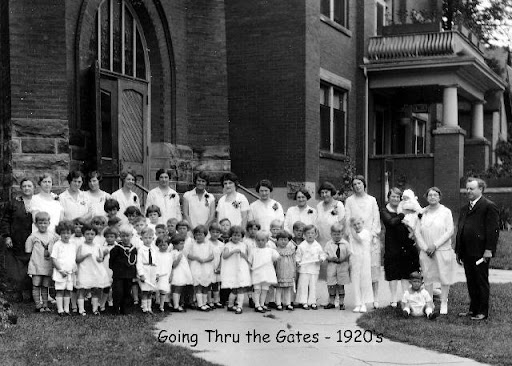
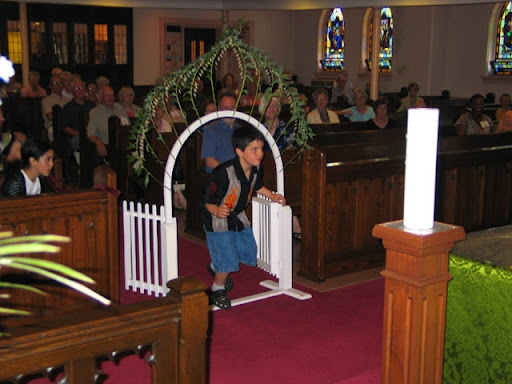
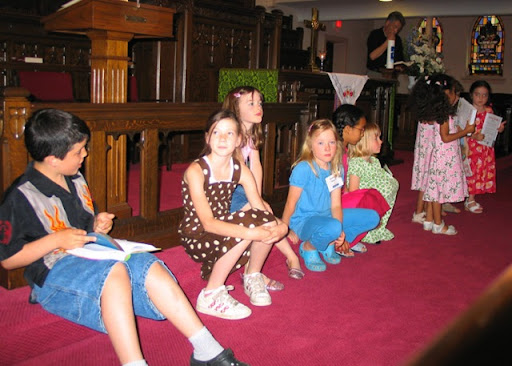
Social Canada - Going through the gate
Thursday, March 06, 2008
Social Canada - Funerals (2/2)
Everybody gathers at a reception room, which is normally decorated with flowers, pictures and other items that remind of or were property of the deceased. At the front door, you will likely find a guest book where everybody will leave some words of comfort. Most of my Canadian friends have a guest book at their places, and we have signed them many times when invited over for dinner or other special occasions. In fact, one of the gifts I got for Valentine's Day was a pretty green guest book, because Gaby knew I wanted one. But I digress...
The pictures are normally presented in a way in which you can go through the person's life almost chronologically. It's a very nice way to remember them, and you will see the close relatives going through them several times and telling stories behind them. All in a very upbeat mood, I must say.
We have people in charge of the Funeral Arrangements my church (a logic consequence of having a relatively old congregation), which means that every time there's a funeral, we'll have coffee, tea, juice and food galore.
There will be an area in the reception room where they will put a couple of comfortable sofas, surrounded by the flowers and maybe one or two portraits of the deceased. That's where the closest family (widow/er, siblings) will sit, so people can go once again and pay their respect or share a chuckle or two.
This reception normally lasts about an hour, and after that everybody leaves, the family being last. As I said, it's completely different to the way they do it in my home country, but I think I like this better.
Now some words about my own personal experience last Saturday: the person who died was the wife of my good friend -and fellow chorister- Harold, a wonderful man I like to call my friend, and also the Minister Emeritus at my church. Harold is 90 years old (I think), but in many aspects, he's younger than me.
He is a remarkable man who has led a fantastic life. I love talking to him, as he always has something interesting to say (plus he practices his Portuguese with me!). Lilian, his wife of almost 70 years, passed away on Sunday; he still came to rehearsal on the following Thursday, and was the image of strength and presence of mind. He enjoyed the stories and the music, and even waved at us on his way out.
Once in the Reception room, I would play the role of the 'filler'. Whenever he was alone, in between visits, I would just go and sit with him, or do silly things like asking him if I could sit on his lap, to which he laughed a lot. During one of those short moments, he told me:
What a guy!
Todos se reúnen en la sala de recepción, que normalmente está decorada con flores, fotografías y otros items que recuerden a o hayan sido propiedad del difunto. En la puerta de entrada, seguramente encontrarán un libro de visitas donde todos dejarán algunas palabras de consuelo. La mayoría de mis amigos canadienses tienen un libro de visitas en sus casas, y nosotros los hemos firmado muchas veces que hemos sido invitados a cenar o alguna otra ocasión especial. De hecho, uno de los regalos que tuve para el día de San Valentín fue un libro de visitas verde muy bonito, porque Gaby sabía que yo quería uno. Pero me estoy yendo del tema...
Las fotos son normalmente presentadas de manera que uno pueda seguir la vida de la persona casi cronológicamente. Es una forma muy bonita de recordarlos, y muchas veces verán a los parientes cercanos acercarse a verlas varias veces y luego contar historias detrás de esas fotos. Todo en un clima ameno, debo decir.
En la iglesia tenemos gente a cargo de los arreglos para los funerales (lógica consecuencia de tener una congregación relativamente vieja), lo que significa que cada vez que hay un funeral, tenemos montañas de café, té, jugos y comida.
Hay un área en la sala en la que ponen un par de sofás, rodeados por las ofrendas florales y tal vez uno o dos portarretratos de la persona que falleció. Ahí se sentarán los familiares más directos (viuda/o, hermanos), así la gente puede acercárseles una vez más a presentarles sus respetos o compartir algunas sonrisas.
Esta recepción normalmente dura cerca de una hora, y luego todos se retiran, con la familia siendo los últimos. Como dije, es muy diferente a lo que yo estaba acostumbrado a ver en mi país de origen, pero creo que me gusta más como lo hacen aquí.
Ahora unas pocas palabras acerca de mi propia experiencia el sábado pasado: la persona que falleció era la esposa de mi buen amigo -y compañero de coro- Harold, un hombre fantástico al que me gusta llamar mi amigo, y que es le Ministro Emérito de mi iglesia. Harold tiene 90 años de edad (creo), pero en muchos aspectos, es más joven que yo.
Es un gran hombre que ha vivido una vida fantástica. Me encanta hablar con él, porque siempre tiene algo interesante para decir (y además a él le gusta practicar su portugués conmigo!). Lilian, su esposa de casi 70 años, falleció el domingo pasado; el igual vino al ensayo el jueves, y fue la imagen de fortaleza y ánimo durante el servicio.
Disfrutó del servicio y la música, y hasta nos saludó con la mano cuando se iba del santuario.
Una vez que estuvimos en la sala de recepción, yo hice el papel de 'extra'. Cada vez que Harold se quedaba solo por un momento, yo me le acercaba y le daba charla, o le decía tonterías como pedirle si me podía sentar en su falda, lo que lo hizo reír mucho. Durante uno de esos momentos, me dijo:
Saturday, March 01, 2008
Social Canada - Funerals (1/2)
But there's one thing: I felt this is something that would fit other blogs better, like Arturo's excellent Cómo es Canadá? ("How's Canada like?). There is no way I can compete with him in this area: nobody does more research and comes up with more original content than him. So I had to find my own way to talk about it; since I haven't technically 'attended' funerals, but participated of them in my role of a singer and member of a church, I will speak about this from that point of view, and my experience as a member of the United Church. I hope I don't digress a lot, I'm not exactly a fan of long posts with not pictures (and I have to blog in two languages!).
Unlike my home country (Argentina), where funerals normally take place the day following the death of a person, there is a long period of time between those two events here in North America: normally, we're talking of about a week; in some occasions, even 10 days. The reason why this can be achieved is that bodies are embalmed almost immediately, so preservation is guaranteed (this if cremation doesn't take place).
The funeral is very carefully planned; there is no room for improvisation. While the funeral services is in the works, visitation takes place at the funeral chapel. This will normally happen two or three days after the death of a person. The service is most likely to be held on the following weekend. Let's say, somebody passes away on a Monday, visitation will be Wednesday and Thursday, and the service will take place on Saturday morning.
The funeral service is a abbreviated -and adapted- version of a Sunday service. The family of the deceased greets at the front, and some times there is a short visitation time prior to the service. There is some musical introduction while people are finding their seats, and then everybody gets up when the family comes in.
After a few Scripture sentences and prayers, it's time for the readings and reflections. Funerals in here are nothing but a celebration of the life of the person that has just died, so the tone is definitely not lugubrious or somber. You can expect one or two people (normally, a relative and a good friend) to come forward and talk for about five minutes each, mostly telling funny anecdotes and stories. It's not unusual to see the widow(er) and children laughing, although it normally ends with the reader trying to maintain his or her composure while saying some final words to their relative or friend.
Other friends and relatives will take care of the Scripture readings, and a sermon will normally follow. All these segments will be preceded by a musical reflection, either by the choir or the congregation. Finally, a couple of prayers, and a moving Prayer of Commendation (adapted from Ruth Burgess):
Into the darkness and warmth of the earth
We lay you down
Into the sadness and smiles of our memories
We lay you down
Into the cycle of living and dying and rising again
We lay you down
May you rest in peace, in joy, in love
May you run straight home into God's embrace
Into the fullness of God's love
We let you go
Into the dance with Jesus and all who wait for you at home
We let you go
Into the hands of the Father who created you in love
We let you go
We love you, we miss you, we want you to enjoy the reward of a good life
Go safely, go dancing, go running home
This is -without a doubt- the most touching moment of the service. After that, just a hymn, a benediction, and the service is over.
Everybody stands while the family leaves the sanctuary, heading toward the reception room, where they will meet and thank the people who attended, while they have a cup of coffee and some food.
I think I'm going to stop here for now, because I still have more to tell. I promise I will finish this story later. Hope you found this interesting.
Pero hay una cosa: me pareció que esta clase de posts serían más acordes a la temática de otros blogs, como el excelente blog de Arturo Cómo es Canadá?. No hay forma en que yo pueda competir con él en este área: nadie investiga mejor sus temas ni escribe mejor material original. Así que tenía que buscar mi propia manera de hablar de este tema; como yo no he 'asistido' a funerales, sino que he participado de ellos desde mi rol de cantante y miembro de la iglesia, voy a hablar de este tema desde ese punto de vista, y mi experiencia como miembro de la Iglesia Unida de Canadá. Espero no irme mucho por las ramas, porque no soy exactamente un fan de los posts muy largos y sin ninguna foto (y encima en dos idiomas!).
A diferencia de mi país de origen (Argentina), en donde los funerales normalmente se llevan a cabo al día siguiente de la muerte de una persona, aquí en América del Norte hay un período de tiempo largo entre ambos eventos: normalmente, estamos hablando de una semana; en algunas ocasiones, hasta 10 días. La razón por la que esto puede hacerse es que los cuerpos son embalsamados casi de inmediato, lo que garantiza su preservación (si es que los restos no son cremados).
El funeral es cuidadosamente pleaneado; nada se deja librado al azar. Mientras los preparativos se llevan a cabo, el velatorio tiene lugar en la sala funeraria. Esto normalmente acontece dos o tres días luego del deceso. Por lo general, el servicio se llevará a cabo el fin de semana siguiente. Por ejemplo, si alguien fallece un lunes, el velatorio será el miércoles y jueves, y el funeral el sábado por la mañana.
La misa de funeral es una versión abreviada -y adaptada- del servicio de los domingos. La familia del fallecido recibe a los asistentes en la entrada, y a veces hasta hay un corto velatorio justo antes de que empiece la ceremonia. Luego de una introito musical mientras la gente busca sus asientos, todo el mundo se pone de pie cuando la familia entra al santuario.
Luego de algunas oraciones y citas a las Escrituras, es hora de las lecturas y reflexiones. Los funerales aquí no son sino una celebración de la vida de la persona que se acaba de ir, así que el tono es más ameno que lúgubre o sombrío. Pueden esperarse una o dos personas (normalmente un familiar y un amigo muy cercano) que pasarán al frente y leerán por unos cinco minutos cada uno, contando historias y anécdotas divertidas que tienen por protagonista a la persona homenajeada. No es para nada extraño ver al viudo -o viuda- y sus hijos riéndose abiertamente, aunque estas evocaciones normalmente terminan con el lector luchando por mantener la compostura mientras dice algunas palabras finales a su pariente o amigo.
Otros amigos y parientes se ocupan de la lectura de las Escrituras, y luego viene un corto sermón. Todos estos segmentos son precedidos por una reflexión musical, ya sea a cargo del coro o toda la congregación. Finalmente, luego de unas oraciones, llega la emotiva Oración de Encomendación (adaptada de Ruth Burgess, traducción mía):
En la oscuridad y la calidez de la tierra
Te depositamos
En la tristeza y la sonrisa de nuestros recuerdos
Te depositamos
En el ciclo de vivir, morir y volver a vivir
Te depositamos
Descansa en paz, en alegría, en el amor
Que puedas volver a casa y ser recibido por el abrazo de Dios
En la plenitud del amor de Dios
Te dejamos ir
A danzar con Jesus y todos los que esperan por tí en casa
Te dejamos ir
En las manos del Padre que te ha creado en el amor
Te dejamos ir
Te amamos, te extrañamos, deseamos que disfrutes la recompensa de una buena vida
Ve con seguridad, ve danzando, corre de vuelta a casa
Este es -sin dudas- el momento más emotivo del servicio. Luego, sólo un himno, la bendición y la misa termina.
Todos se ponen de pie mientras la familia se retira del santuario, yendo hacia la sala de recepción donde se encontrarán y agradecerán a quienes vinieron, mientras comparten un café y algo para comer.
Creo que voy a parar aquí por ahora, porque aún tengo más que contar. Prometo que terminaré esta historia más tarde. Espero que lo encuentren interesante.